ITERUM
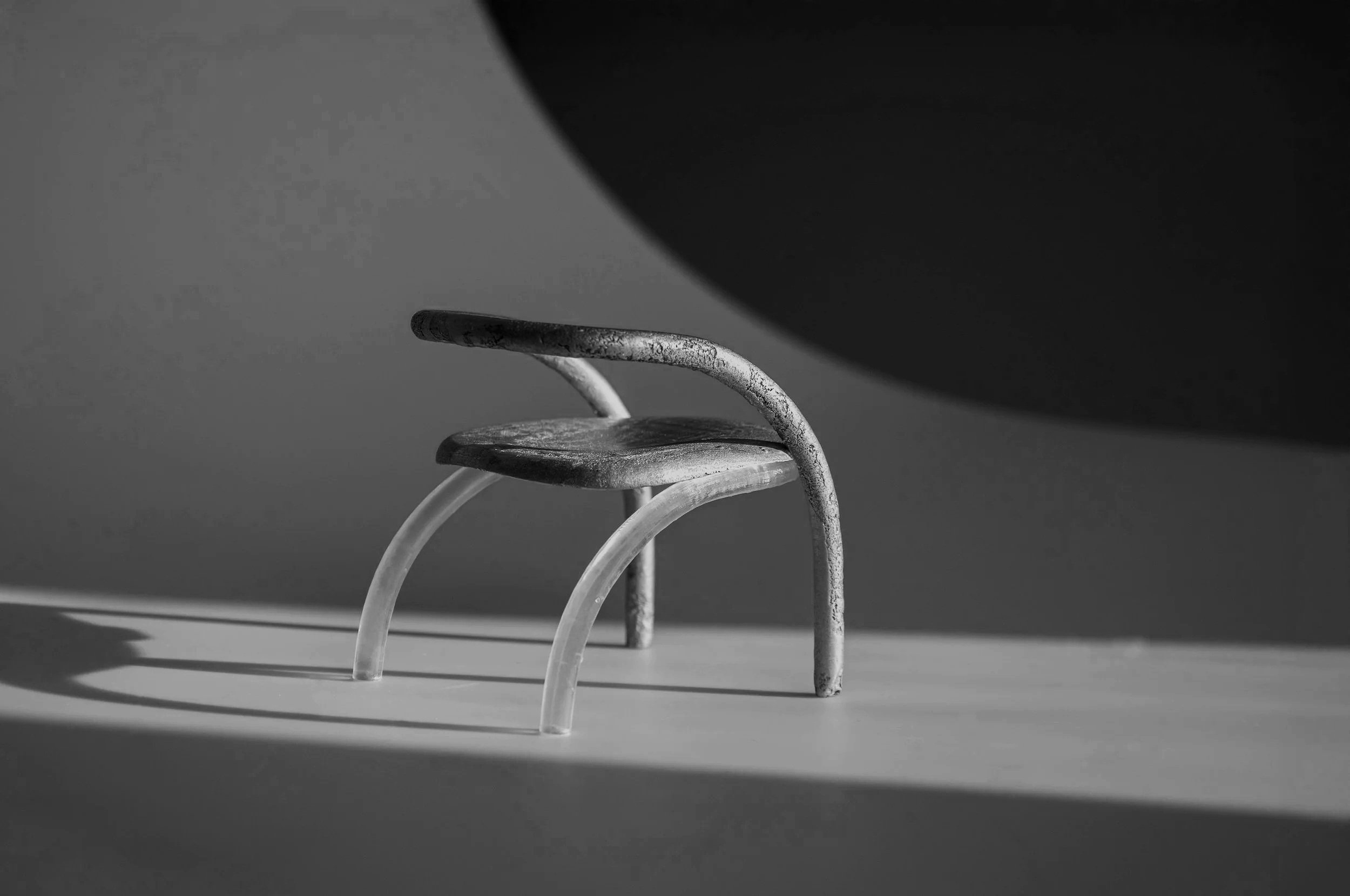
[Iterum is a bachelor thesis project developed in collaboration with Weland Aluminium and The National School of Glass in Sweden, with the supervision of Gustav Winsth. The project focused on exploring how industrial waste could be activated as a resource to support and sustain local craft-based industries.]
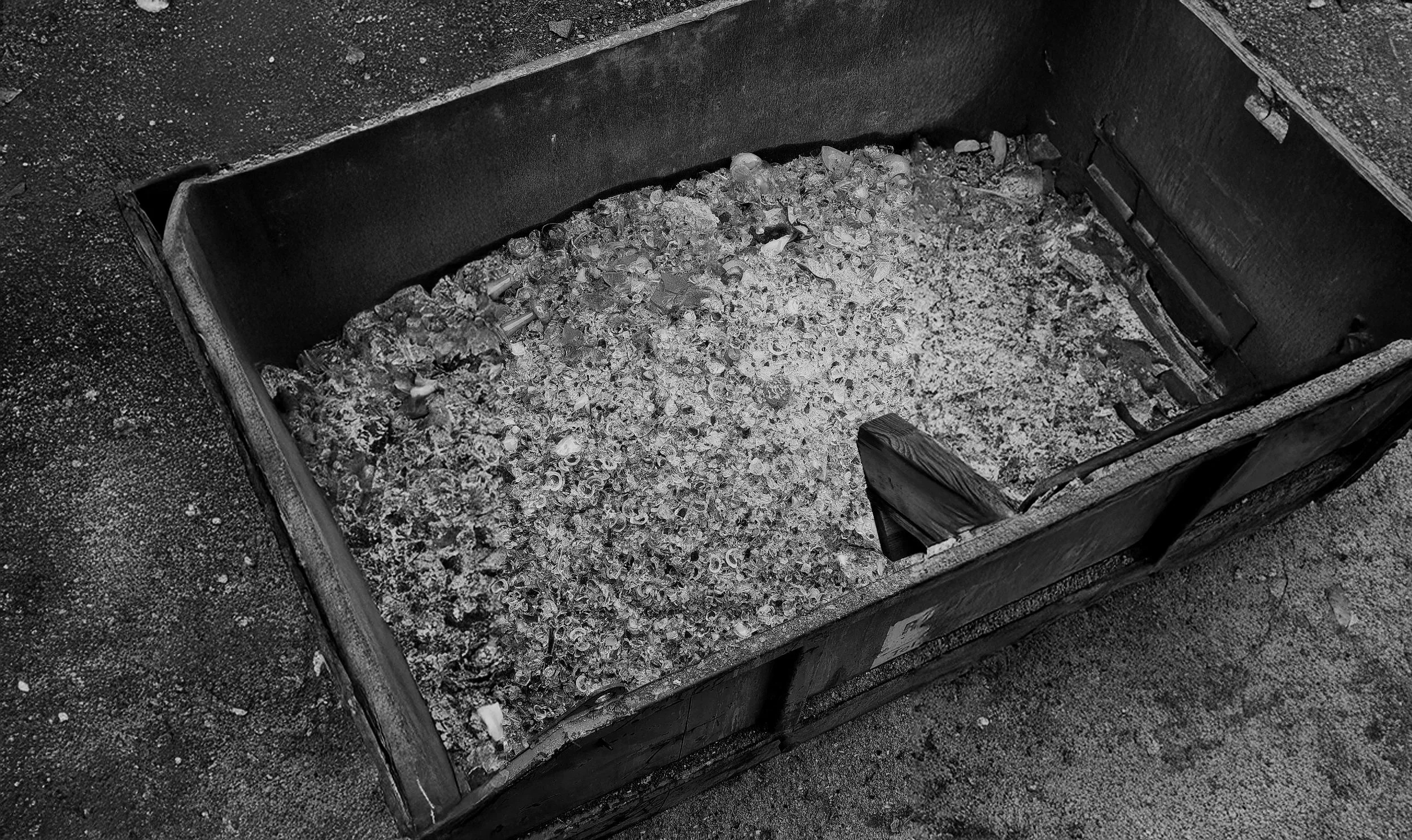
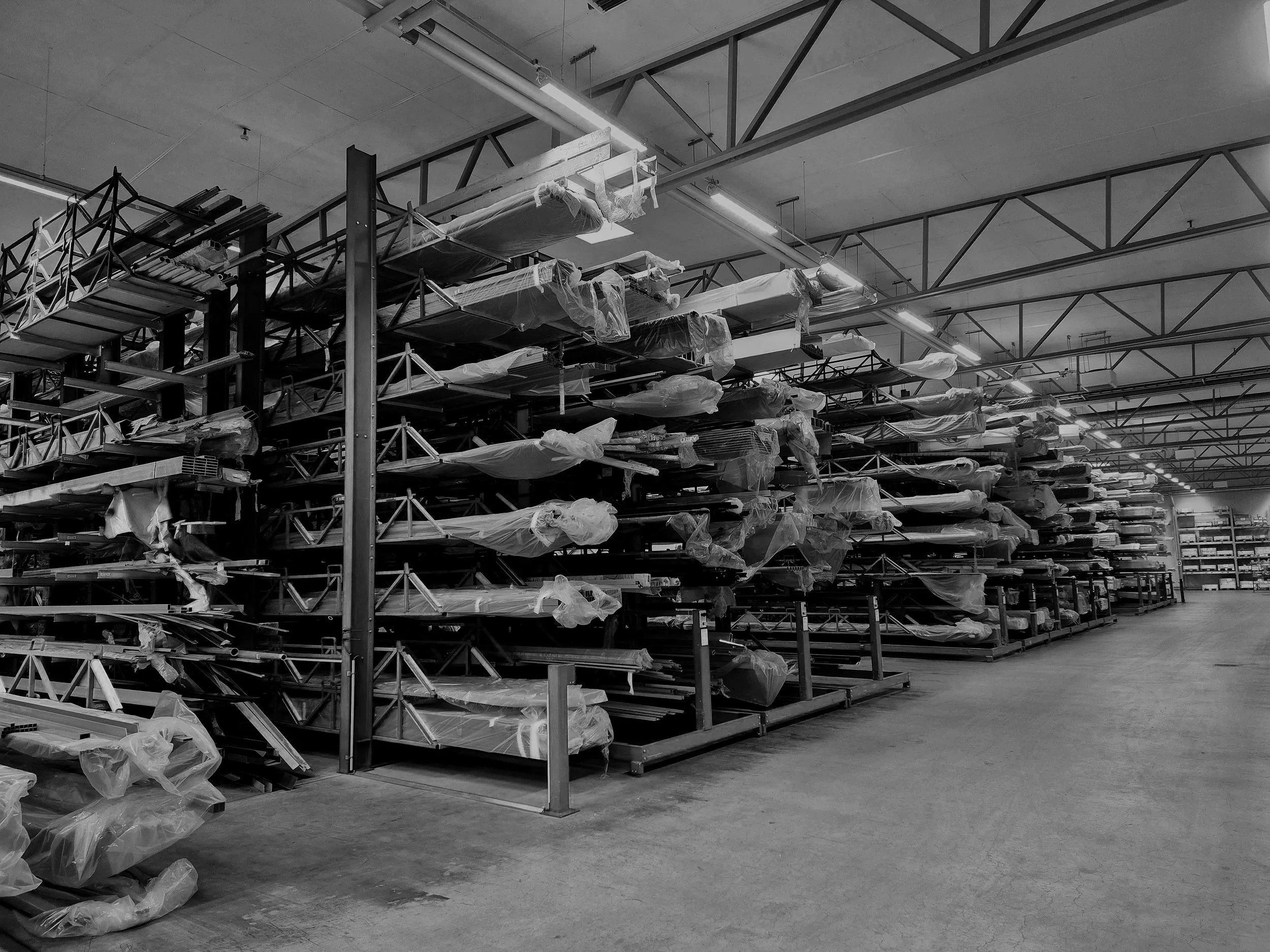
Industrial waste often never reaches the stage of becoming a product, it is dismissed long before its potential is explored. Iterum challenges this linear economy model by introducing a second production cycle where waste becomes the starting point rather than the endpoint. Through on-site work with Weland Aluminium and Riksglasskolan, the project reveals how local industries can, through circular economy principles, repurpose their own discarded materials to build relevance in a changing economic market.
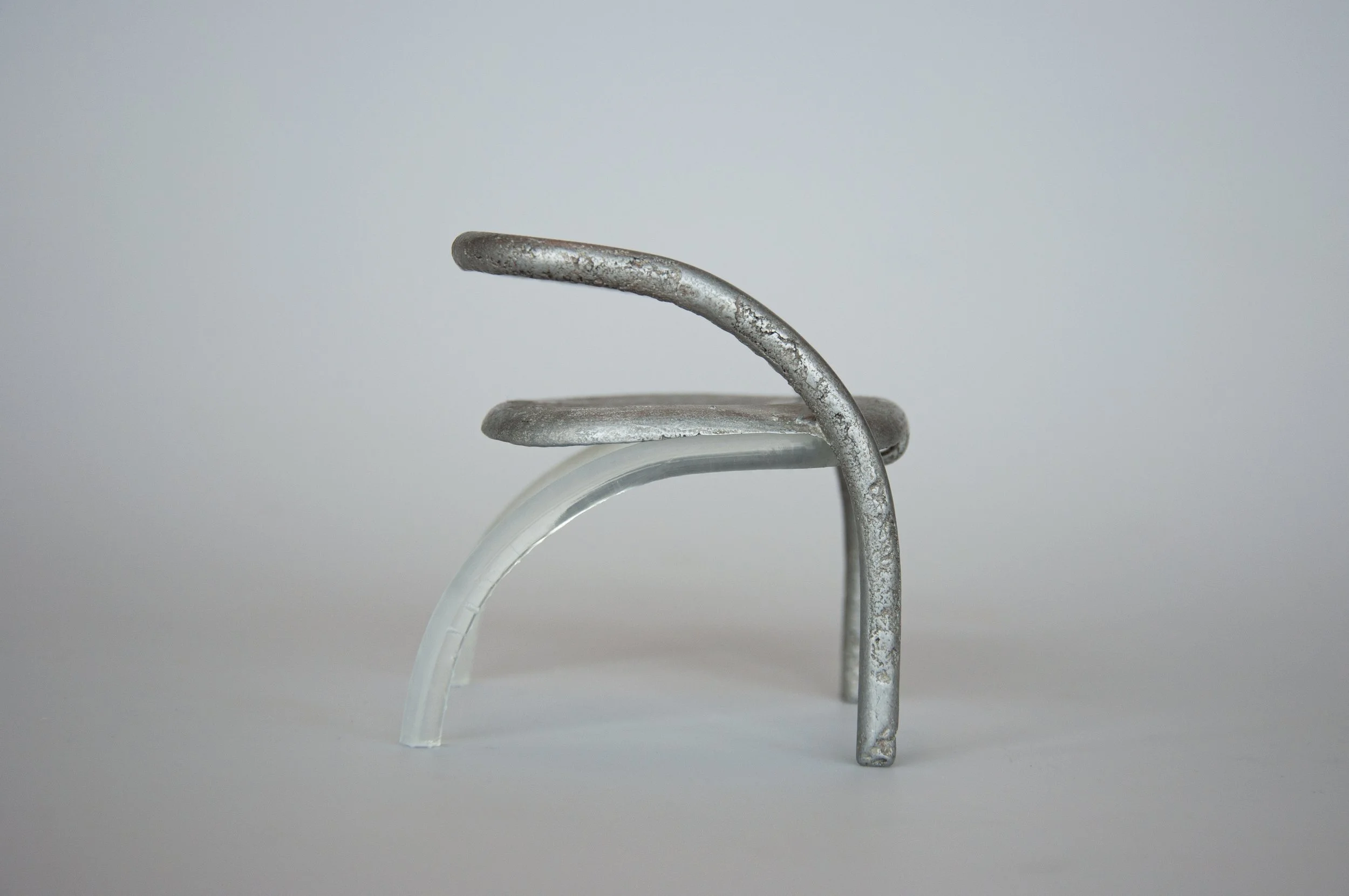
Lost PLA-casting and CAD-based design serve as the bridge between traditional craft and contemporary digital processes. These tools provide precision, reduce unnecessary waste, and enable forms that challenge the boundaries of established craft practices. Central to this process is the craftsmen’s tacit knowledge, a form of expertise that cannot be automated.
By integrating craftsmen into the design process to learn from their experience, the project foregrounds tacit knowledge as a powerful engine for problem-solving and innovation, while also highlighting its vulnerability. As traditional industries decline, this embodied knowledge becomes an increasingly scarce resource, making its recognition and activation essential to future development.
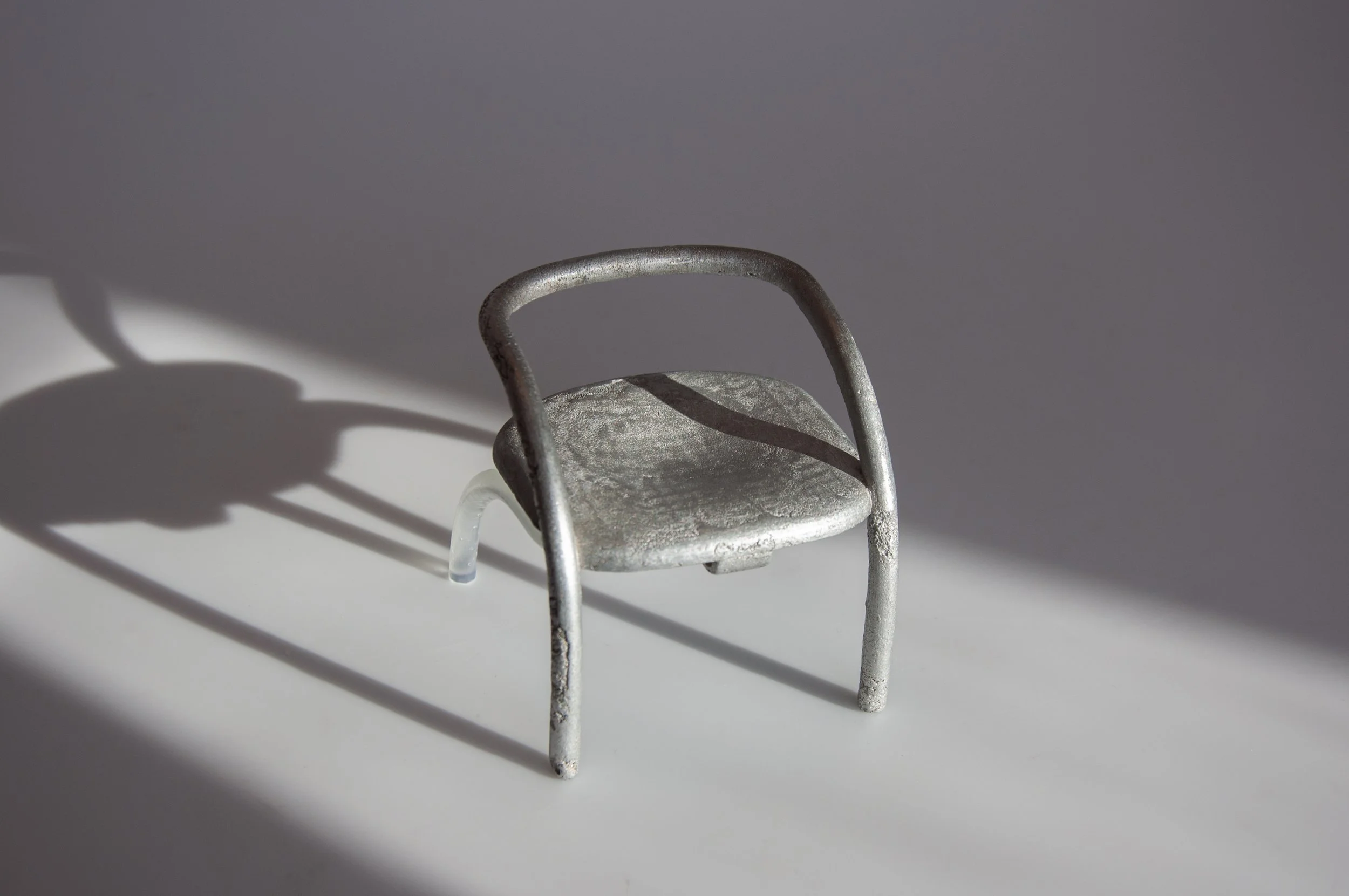
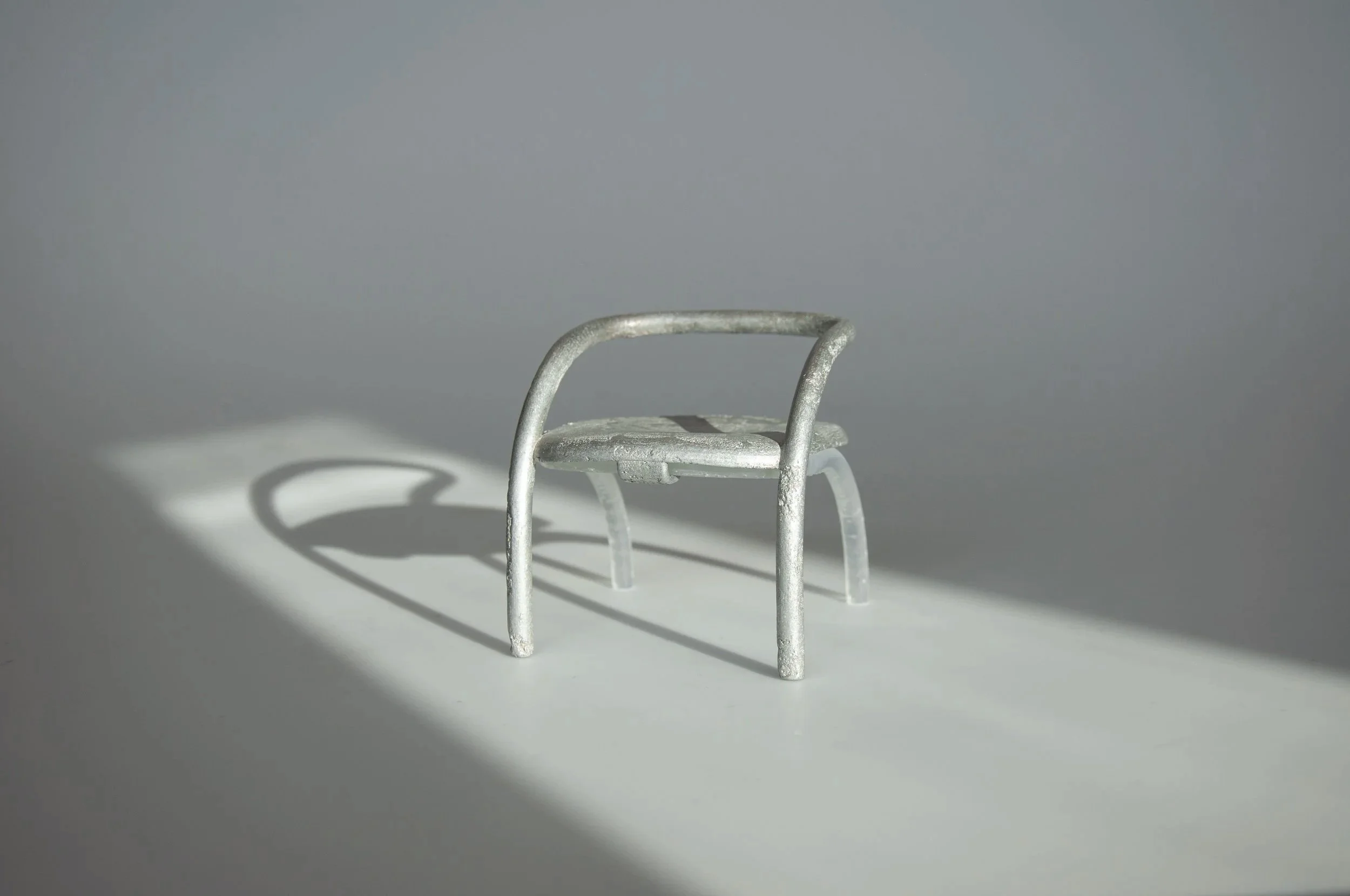
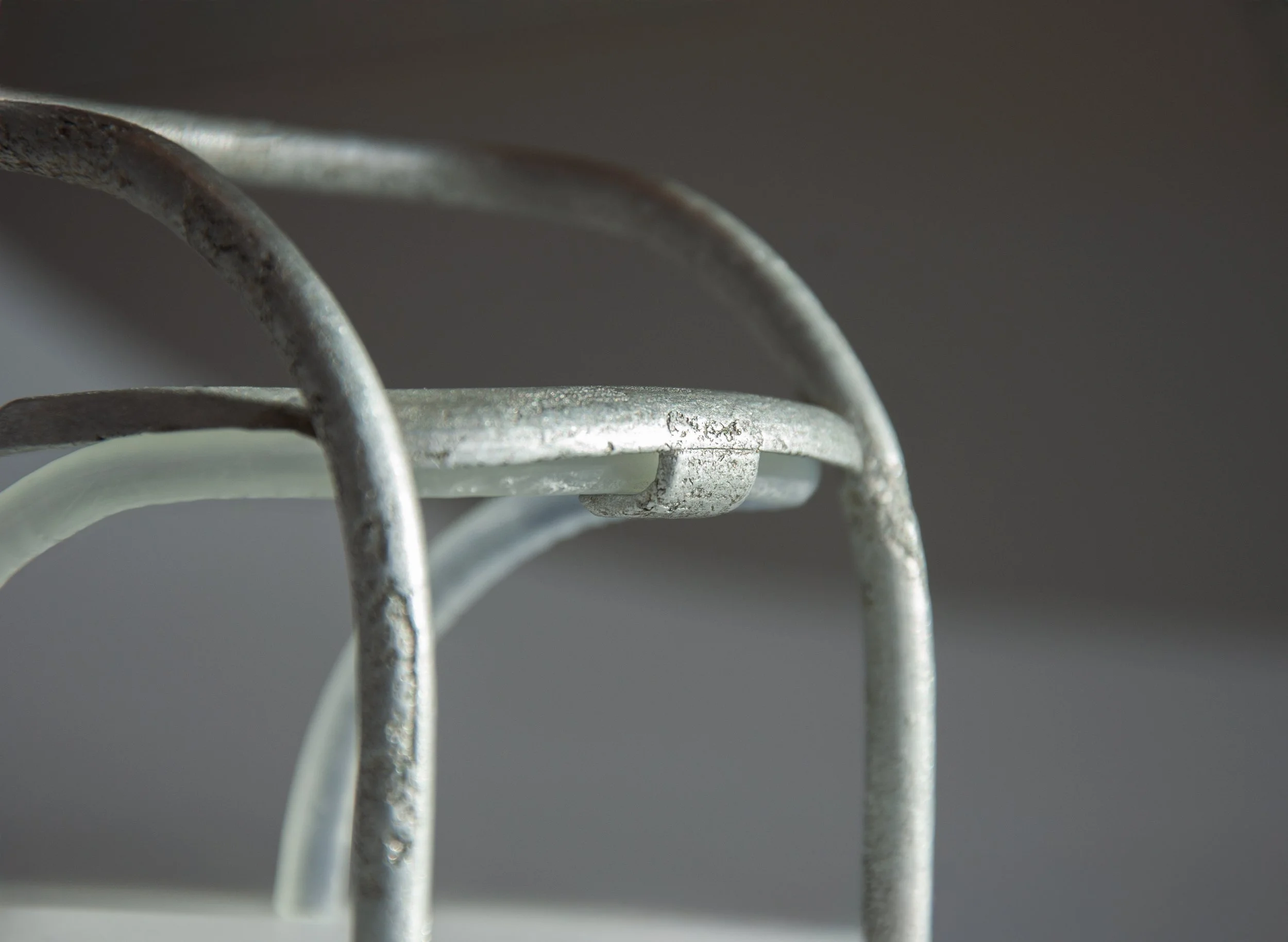
Iterum embraces the raw character of industrial waste and lets its material history guide the form. The chair’s components are intentionally shaped with complex geometries that would be difficult to achieve through traditional methods alone, allowing digital tools to push craft into new visual territory. The chair’s components use digitally generated geometries, featuring controlled wall thicknesses and draft angles that exploit the precision achievable through Lost PLA-casting.
These forms highlight the materials’ ability to capture fine detail while accommodating shrinkage and flow patterns. By leaving each joint visible and mechanically separated, the design prioritises structural clarity and disassembly. The final aesthetic emerges from these technical conditions: a composition of honest production, technical proficiency and the cyclic materials.
DESIGN
product, innovation
COMPOSITION
DIMENSIONS
industrial waste; aluminium, glas
550 x 550 x 600 mm
COLLABORATOR
Weland Aluminium AB, Riksglasskolan, Gustav Winsth
Iterum shows how industrial waste can evolve from a byproduct into a driver of innovation within industries. By combining local materials with digital tools and skilled craftsmanship, the project creates a circular model that strengthens both sustainability and industry relevance. Exhibited at Utvandrarnas Hus, Växjö, 2025.